
Compendium of Wondrous Links vol X

More interesting reads worth checking out

Tech
- Use Python on AWS Lambda instead of JavaScript.
- Create Escher like images using Julia.
- BeeWares, a collection of tools to help in all the phases of Python development
- Crete project templates with Cookie Cutter.
- An interactive Maze Solver.

About development
- I’ve still confused with this “learning code is cool”, as this article says. I’m not sure if this is a bad time to be a beginner. Yes, it’s true that too many options is confusing, but the amount and quality of instructional material at the moment is absolutely incredible. Beginners right now are a thousand times more capable of doing stuff than 20 years ago, just by the increase of productivity and clarity.
- Tools don’t solve the web problems. Related to the first about the constant new tools for working on a web development, and their problems.
- This tweet chain describes quite good the constant roller coaster when developing code.
- Be friends with failure. The master has failed more times than the beginner has even tried.
https://twitter.com/garybernhardt/status/599679195292176384
- But that’s better said than done. Working in the tech industry can be difficult. I quite the tech industry.
- There is a lot of talking about technical debt. I see it as an unavoidable part of development, if you have any intention of shipping a product. Why the way we look at technical debt is wrong.
- Talking about one of the two most difficult problems in software: How to name things. The other being cache invalidation and off by one errors…
- An interesting interview with Pete Goodlife about how the things outside code (team work, communication, dealing with complexity, etc) are extremely relevant for coding.
- And talking about that, organisation skills are really important and they are very difficult to teach or to recognise.
- An interesting article about loyalty, longevity and burnout on work environments.
Leonardo numbers

I have my own set of numbers!
Because Fibonacci numbers are quite abused in programming, a similar concept.
L0 = L1 = 1

Ln = Ln-2 + Ln-1 + 1
My first impulse is to describe them in recursive way:
def leonardo(n):
    if n in (0, 1):
        return 1
    return leonardo(n - 2) + leonardo(n - 1) + 1

for i in range(NUMBER):
    print('leonardo[{}] = {}'.format(i, leonardo(i)))
But this is not very efficient to calculate them, as for each is calculating all the previous ones, recursively.
Here memoization works beautifully
cache = {}

def leonardo(n):
    if n in (0, 1):
        return 1

    if n not in cache:
        result = leonardo(n - 1) + leonardo(n - 2) + 1
        cache[n] = result

    return cache[n]

for i in range(NUMBER):
    print('leonardo[{}] = {}'.format(i, leonardo(i)))
Taking into account that it uses more memory, and that calculating the Nth element without calculating the previous ones is also costly.
I saw this on Programming Praxis, and I like a lot the solution proposed by Graham on the comments, using an iterator.
def leonardo_numbers():
    a, b = 1, 1
    while True:
        yield a
        a, b = b, a + b + 1
The code is really clean.
Compendium of Wondrous Links vol IX
Welcome back to this totally non-regular compilation of interesting reads. Enjoy!
- A Pixel Artist Renounces Pixel Art.
- A module of Python utilities aiming to complement the standard library. Boltons
- Named Pipes in Unix. Pipes are a really powerful tool.
- I’m each day more convinced that the biggest problem that an developer faces today is the internal expectations and unfair comparison. Productivity vs Guilt and Self-Loathing.

- On secretly Terrible Engineers Curiously enough, in my current job, one of the first things my manager said to me was: “your interview was brilliant, but here’s a great book on the area you seem to be less good” 😉 It was a great book indeed.
- The linked article about hiring is also worth reading.
- Why someone would want to use Vim????
- Managing and lead engineers is challenging. Jessica McKellar talks about it.
- Did you ever wonder why some songs feel so much as others? Chord progressions on 5,000 songs. This video illustrates what a chord progression is beautifully (and hilariously)
- Cognitive overload is a real thing. Simplifying processes with simple rules can greatly help on taking decisions.
How Not to Be Hard on Yourself via @GreatWorkLife http://t.co/WokozxmrrO—
Donna Svei (@AvidCareerist) March 17, 2015
- Social networks space is very interesting, because everyone seems to have different opinions on what is important and what are the changes to come. Here one article about this. Here a different view. And here a comment to the different view.
- Given the current trend of glorifying youth in our field, the title “senior developer” seems to be used somehow lightly. I don’t particularly like decalogs or “must have“, because careers are not a list of checkboxes. That said, I think that talking about maturity is always interesting, and this article has very good point on great skills to have that experience should help with. On Being A Senior Engineer.
- In this follow up there an interesting point. Why culture is (not always) bullshit.
- From a more practical point of view, lessons learned in software development.
- Some explanations about passwords and how they should be treated, including why is not OK to send you your password over email.
- For a purely external point of view, the market on Visas for programmers in US seems quite weird.
Optimise Python with closures
This blog post by Dan Crosta is interesting. It talks about how is possible to optimise Python code for operations that get called multiple times avoiding the usage of Object Orientation and using Closures instead.
While the “closures” gets the highlight, the main idea is a little more general. Avoid repeating code that is not necessary for the operation.
The difference between the first proposed code, in OOP way
class PageCategoryFilter(object):
    def __init__(self, config):
        self.mode = config["mode"]
        self.categories = config["categories"]

    def filter(self, bid_request):
        if self.mode == "whitelist":
            return bool(
                bid_request["categories"] & self.categories
            )
        else:
            return bool(
                self.categories and not
                bid_request["categories"] & self.categories
            )
and the last one
def make_page_category_filter(config):
    categories = config["categories"]
    mode = config["mode"]
    def page_category_filter(bid_request):
        if mode == "whitelist":
            return bool(bid_request["categories"] & categories)
        else:
            return bool(
                categories and not
                bid_request["categories"] & categories
            )
    return page_category_filter
The main differences are that both the config dictionary and the methods (which are also implemented as a dictionary) are not accessed. We create a direct reference to the value (categories and mode) instead of making the Python interpreter search on the self methods over and over.
This generates a significant increase in performance, as described on the post (around 20%).
But why stop there? There is another clear win in terms of access, assuming that the filter doesn’t change. This is the “mode”, which we are comparing for whitelist of blacklist on each iteration. We can create a different closure depending on the mode value.
def make_page_category_filter2(config):
    categories = config["categories"]
    if config['mode'] == "whitelist":
        def whitelist_filter(bid_request):
            return bool(bid_request["categories"] & categories)
        return whitelist_filter
    else:
        def blacklist_filter(bid_request):
            return bool(
                categories and not
                bid_request["categories"] & categories
            )
        return blacklist_filter
There are another couple of details. The first one is to transform the config categories into a frozenset. Assuming that the config doesn’t change, a frozenset is more efficient than a regular mutable set. This is insinuated in the post, but maybe didn’t get the final review (or to simplify it).
Also, we are calculating the intersection of a set (operand &) to then reduce it to a bool. There is currently a set operation that gets the result without calculating the whole intersection (isdisjoint).
The same basic principle applies to calculate the bool category for the black filter. We can calculate it only once, as it’s there to short-circuit the result in case of an empty config category.
def make_page_category_filter2(config):
    categories = frozenset(config["categories"])
    bool_cat = bool(categories)
    if config['mode'] == "whitelist":
        def whitelist_filter(bid_request):
            return not categories.isdisjoint(bid_request["categories"])
        return whitelist_filter
    else:
        def blacklist_filter(bid_request):
            return (bool_cat and categories.isdisjoint(bid_request["categories"]))
        return blacklist_filter
Even if all of this enters the definition of micro-optimisations (which should be used with care, and only after a hot spot has been found), it actually makes a significant difference, reducing the time around 35% from the closure implementation and ~50% from the initial reference implementation.
All these elements are totally applicable to the OOP implementation, by the way. Python is quite flexible about assigning methods. No closures!
class PageCategoryFilter2(object):
    ''' Keep the interface of the object '''
    def __init__(self, config):
        self.mode = config["mode"]
        self.categories = frozenset(config["categories"])
        self.bool_cat = bool(self.categories)
        if self.mode == "whitelist":
            self.filter = self.filter_whitelist
        else:
            self.filter = self.filter_blacklist

    def filter_whitelist(self, bid_request):
        return not bid_request["categories"].isdisjoint(self.categories)

    def filter_blacklist(self, bid_request):
        return (self.bool_cat and
                bid_request["categories"].isdisjoint(self.categories))
Show me the time!
Here is the updated code, adding this implementations to the test.
The results in my desktop (2011 iMac 2.7GHz i5) are
        total time (sec)  time per iteration
class   9.59787607193     6.39858404795e-07
func    8.38110518456     5.58740345637e-07
closure 7.96493911743     5.30995941162e-07
class2  6.00997519493     4.00665012995e-07
closur2 5.09431600571     3.39621067047e-07
The new class performs better than the initial closure! The optimised closure is anyway trumping, saving a big chunk compared with the slower implementation. The PyPy results are all very close, and it speeds up 10x the code, which is an amazing feat.
Of course, a word of caution. The configuration is assumed to not change for a filter, which I think is reasonable.
Happy optimising!
John Siracusa’s OS X reviews
Today John Siracusa announced that he won’t be making more OS X reviews.
Typically journalists or reviewers don’t announce that they stop doing something. They just stop doing it, and maybe explain it after someone asks them.
But John’s reviews were something truly special, and a lot of people on the tech world has lamented the announcement.
I think that the Mac community has always been quite vibrant and passionate, allowing detailed discussion. Crossing the line of obsession sometimes. In other tech worlds, the discussion is more cold and rational, even aseptic. Apple discussion has always been more emotional and sort of aiming for greatness. Years ago the distinction was quite pronounced, when Apple had a small and passionate group of followers.
Tech reviews tend to be on two extremes. Either too much spec and features enumeration, making them arid and boring. Or too much focused in fitting a narrative, talking about whether something is the best or the worst ever.
But these OS X reviews are the perfect combination of both aspects, and they remain the gold standard of tech literature.
John’s reviews are extremely detailed, even to the level of obsession, but yet they are easy to read and understand.
They present a clear exposure of new features. But add historical context of decisions, compromises and forecasting areas of improvement.
Siracusa has strong opinions in quite a few areas, but he’s exposing all the facts, and explaining his biases.
I can’t stress how difficult is keep you hooked and eager to read another 8,000 words, when you’re talking in length about filesystems, pixel alignment, background process handling or Finder performance.
I haven’t found anything that can be on par, though there are great writers writing about technology these days. I can read better reviews now than 5 or 10 years ago.
While I understand his reasons for stopping, and think we have been lucky to have them around for so long, I can’t help but feel a little sad.
I’ll keep following him in his blog, twitter, and of course on his weekly podcast, as well as collaborations. At least, John Siracusa keeps a healthy production that we can consume. I’m sure we’ll keep reading and listening great stuff.
Fascinating
The importance of Spock as an icon of the XX century cannot be overstated.

Let me go back for a second. When I was a child in Spain, access to Star Trek was pretty limited. There were no reruns of the original series. I think it only was emitted during the 70s in Black and White. The Next Generation was broadcasted with a four or five year delay. And it stopped for several years just at the end of the third season. It took me years to know what happened with Picard and Locutus! Also, the movies were not big hits.
But everyone knew who Spock was. A lot of people told my uncle he looked like “Dr” Spock. He beared a clear resemblance with Leonard Nimoy when he was young.
In a lot of ways I’ve always consider Star Trek my “prime geeky love“. That iconic status and mystery, made me search for it. After having access to Internet, I devour everything about it. It was “my thing“, more than other stuff I love, because it was less known among my circles. I bought the whole DS9 series in VHS from UK, over the course of several years. I say that I learned spoken English through Star Trek. And written English through RPG manuals.
Spock is the most genuine example of “cool scientist“, in opposition from the “mad scientist” trope . Probably the first example. And was the one getting the spotlight in the series. He was the character to follow.
He is iconic to a level that only competes with a bunch of icons. I’ve seen him in posters of parties or t-shirts in big stores. He’s know by people that don’t even know what Star Trek is.
And none of this should been possible without the extraordinary performance by Leonard Nimoy. It is clear that he contributed heavily to a lot of things that define Spock. From the Vulcan Nerve Pinch to the Vulcan salute. But his biggest legacy is the fact that his performance is replicated constantly. Every single Vulcan in Star Trek is impersonating Leonard Nimoy playing Spock. In tons of other media we have similar interpretations of “emotionless aliens/outsiders“. He created an archetype, which is a huge achievement. That is also a heavy burden, and Leonard Nimoy seemed only to embrace it after years of struggle.
 There is also an overlooked idea in Vulcan philosophy that has always been appealing to me. IDIC. Infinite Diversity in Infinite Combinations. It resonates in me in a lot of diff
erent levels. On the personal level, on how important is to embrace the diversity that us humans are capable of produce.
And to the software creation, on how wonderful is the combination of different code, assembled to produce something magical together.
Leonard Nimoy will be greatly missed. Rest In Peace.

Life long and prosper.
Compendium of Wondrous Links vol VIII
More great reads!

About code creation
- It seemed like a good idea at the time. How tech decisions done at some point in time can have a big impact much much later. Unfortunately, this is unavoidable, developing software is based in dealing with imperfect information all the time.
- Fear Driven Development.
- Dealing with different languages is difficult in programs (and otherwise).
- Seven Laws of Sane Personal Computing.
- Great compilation of Python libraries that deserve to be widely used.
- Debug like Sherlock Holmes. One of my favourite ways of thinking on debug is: “Once you eliminate the impossible, whatever remains, no matter how improbable, must be the truth.“
- How to work with Hexagonal grids. Amazing article and a must read if you want to work with these kind of grids for a game.
- The sed FAQ. One of my resolutions for this year is try to learn sed better and use it more.
- Small general-purpose commands that can be combined to compose larger commands. The lesson of Vim. Interesting follow up here.
- git is the epitome of a UNIX tool: powerful, tied to the command line, high learning curve, amazing. Hidden consistency.
- A talk on how to program coroutines in Python through generators.
- Using command line tools for map reduce. Piping data is incredibly powerful. Also, GNU Parallel is an amazing tool.
- Use crypto to avoid database writes.

The job of developing
- Speed in Software Development. Lengthy article about the different paces in developing software, and impact of different factors. I’ve already talked on how I think that “sprint“ is a bad name.
- Goals in code coverage. Metrics should be subject to analysis to focus the meaningful objective.
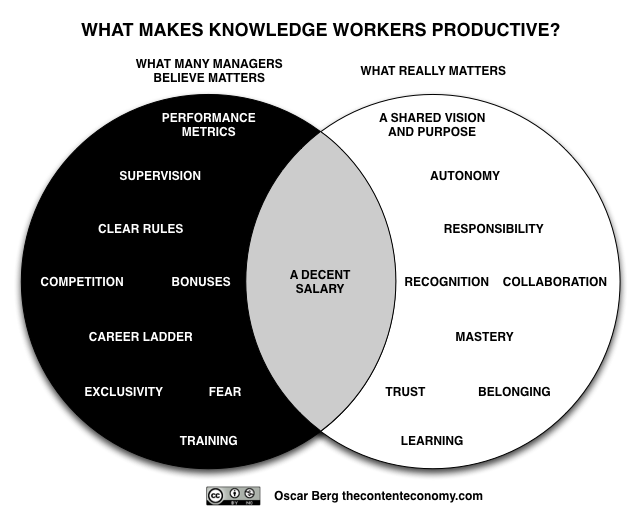
- While I understand the concept, I don’t really like the word talent. Like every overused word, It can hide very dysfunctional things.
- Simplifying the problems doesn’t usually look impressive. The Parable of Two Programmers.
- Bug finding is slow in spite of many eyeballs.
- Feature requests that look simple. How a taxation change took 4 developers a week to handle.
- Performance reviews are a complicated part of the manager-managed relationship. What your manager really thinks of you.
- Great advice for managers: 44 engineering management lessons.
- Why sometimes I hate myself, on the self imposed pressure of comparing yourself with the (unreal) public faces of other. Another article related.
- I still can’t see why Open Space plans are still the standard in new companies.
- Fascinating read. God’s Lonely Programmer.
- Good tips on writing a technical CV.
- Computers are awesome!
- “Forty years later Weinberg’s “egoless” approach, in which mistakes are accepted as inevitable and reviews are performed in a collegial way, remains the sanest way to produce code” “Rock Star” Programmers
 Other stuff

- Amazing models from the original Star Wars trilogy.
- And how sound effects were done back in the day. Millennium Falcon’s hyperdrive malfunction.
- Also, preproduction concept images for Star Wars.
- Raiders of the Lost Ark in Black and White. It looks great.
- Mastering records and why do all records sound the same.
- Using the Nintendo Power Glove as an Stop-Motion animation tool. Amazing creative use of a tool for something completely different that it was created.
- The problem measuring financial assets and determine how much benefit (or loss) on a bank.
- Why adventure games suck and what we can do about it. 1989’s article by Ron Gilbert. Fantastic.
- The iPod classic has been discontinued. We probably won’t have another device with the sole intent of listening to music. On Death and iPods: A Requiem.
- How Bezier curves are drawn.
- Get exposure of an indie game is difficult. Some advice on it.
- DDoS attacks are growing to be very scary. A good article about how they work. The visualisation is mesmerising.
- What do your password say about you? The secret life of passwords.
- A Brief History of Databases.
- Erlang the movie. Every programming language should do one of these. I love that they make the demo on phones, as the erlang is a measure of phone load.
- IBM model M. Arguably the most famous keyboard ever made.
- Databases a 14.4MHz. Impressive benchmark.
TV interface

Is this really the best we can do?
Isn’t it quite absurd that we haven’t nail this yet?
We recently heard about all the great advances in terms of image quality, 4K, bending screens… Yet controlling a TV feels clunky and awkward.
Even worse, given the never ending increase in devices connected to the TV (DVDs, Blu Rays, AppleTVs, consoles…) the usage of different remote controls is painful, unless a Universal Remote is used. But even in that case, the process itself of selecting the activity is weird, for very common operations.
For example, if you want to play a movie on an AppleTV (or DVD player, or TiVO, etc), you may have to turn it on, then (using the remote), turn on the TV, select the input (which may involve cycle through a lot of unused inputs, like Composite), adjust the volume, and then get the AppleTV controller.
If at any point we need to adjust the volume, we’ll need to get again the TV remote.
All this is very weird and not the best user experience…
So, just for the sake of discussion, let’s say a couple of ideas for what I think could be a TV with a much better interface:
– Everything is a channel. Why HDMI is “an input” but TV channels are numbered? Allowing to select HDMI input as channel 3 allow easy access to it, and simplifies the interface.
If there is no input (e.g. the DVD is off), the channel will be skipped for channel surfing purposes, unless the user specifically request the channel number.
– A good remote. I don’t think that there’s any excuse for not being Universal and Programable Remote. The included TV Remote should aim to control more things than just the TV. It should have as few buttons as possible, more on that later. And, another important feature, it should be possible to make it beep if lost (e.g. clicking a button on the TV)
– Programmable channels. When a channel is on selected, all the settings (mainly image controls, but may also include a volume adjustment) will change accordingly. The remote will also know that the controls are now related to this channel. For example, if the DVD channel is selected, most of the keys are related to the DVD remote (except volume keys); if the AppleTV channel is selected, the keys refer to the AppleTV controls.
A list of channels (ideally showing their current input) that allows easy rearrangement and enabling disabling them will be great to navigate and give an overview.

An interesting (and useful) design, a two-sided remote on the Chromebox. Obviously, not from a TV manufacturer
– A companion app that allows to configure all the parameters easily on a PC or mobile app.
I understand that the complexities of the different devices in the living room is complex, and that there are problems that can be impossible to fix (for example, having an HDMI router may still present problems given that more than one “channel” will be coming from the same “input”)
But I find quite ridiculous that we are still dealing with such terrible interfaces in TVs these days…
Compendium of Wondrous Links vol VII
Here we go again… This time I’m loosely grouping them, it has been a while and there are so many things!
- The best programming advice I ever got, which actually is about the worst advice, being reverted.
- The social dynamics of code review. While code review is very useful, is also important to put the stress on the proper parts. As feedback in general, it needs to be constructive and tactful.
- The Future of Programming. This is an incredible way of giving a presentation, and the best of all, the form adds a lot to the underlaying ideas.
- I’ve talked about how readability should be the default setting to write code in this blog a couple of times. Optimise for readability first.
- A brief, incomplete, and mostly wrong history of programming languages.
- What happens on a filesystem when you copy 39TB of data. Very deep technical discussion on the implementation details of cp.
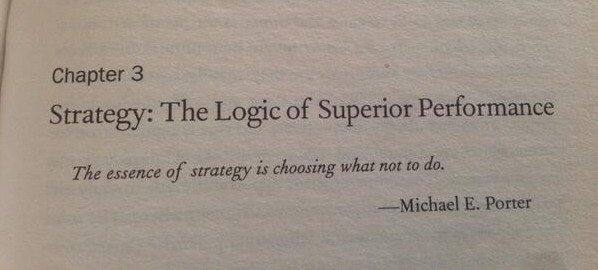
- An extremely though-provoking article about the possible positive things can have a negative effect. How Perks Can Divide Us. Corporate culture is something extremely complex.
- Mora about culture and biases on Mirrorcracy.
- I do not like the idea that people have a “level”, ignoring all the dynamics (I talked about this here). There are no B players.
- A set of articles talking about management skills. Is a great compilation of the different aspect of management. Great read even if you’re not “an official manager”, as is capital to understand what are the things that a (good) manager should do and challenges that the role presents
- Some ideas about productivity. I like this quote a lot: “There is no one secret to becoming more productive, but there are hundreds of tactics you can use to get more done”
- We tend to idealise the work involved in some stuff we really like. In particular in creating video games. It’s okay not to follow your dreams, but I think it could apply to a lot of other aspects

- Dragon’s Lair was a mind-blowing game. Arcade story. The Banner Saga proves that 2D animation is totally ageless and can be a fantastic look for a new game.
- Lessons from Doom. An game design analysis on the game, including the differences between Doom and modern FPS.
- Maniac Mansion design documents. It’s amazing to see the things that changed and the things that reminded the same.
- Galaxy Quest is 15 years old at this point. Is still amazing. The cast and crew talks about it.
- Taxis and rainbows. Security is HARD and non-obvious.
- Web mistakes of ’99 not including dancing baby gifs. And the update at 2011
- The problems of essentialism.
- Very interesting podcast episode of a very interesting podcast. About practice and the 10K hour rule.
- Dividing Europe in 28 equipopulous regions.
- Setting offices spaces is a challenge. Cubicles has been a choice, though it seems to be fading after being turned up into a monstrosity.


